Kerassentials Reviews: What This Nail and Skin Oil Contains and What to Realistically Expect
By the EarthHealth Editorial Team · Updated October 2026
Disclosure: this article contains affiliate links. If you buy through them, we may earn a commission at no extra cost to you. It does not change what we write.
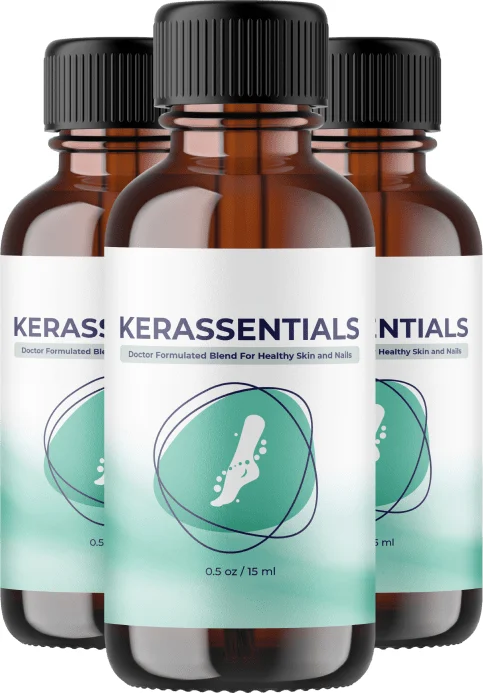
Kerassentials at a Glance
| Form | Topical oil with brush applicator — 0.5 oz (15 ml) per bottle, for external use only |
| Core ingredients | Undecylenic acid (5%) plus tea tree, clove bud, manuka, lavender, lemongrass, camphor, menthol and carrier oils |
| Made in | USA, in an FDA-registered facility that follows GMP (per the official site's badges) |
| Guarantee | 60 days, counted from the delivery date |
| Shipping (US) | $9.99 on 2 bottles; free on the 3- and 6-bottle packages — confirm at checkout |
| Main caution | Contains almond and walnut oils and strong essential oils — patch test, and see a doctor first if you have diabetes |
Toenail fungus is one of those problems that rarely hurts much but never seems to leave. A nail turns yellow or brown, thickens, starts to crumble at the edge, and months later it still looks the same. Doctors call it onychomycosis, and it becomes more common with age, sweaty shoes, athlete's foot, diabetes and poor circulation. It is also notoriously slow to clear, because the fungus lives in and under a hard plate of keratin that grows out only a millimeter or two a month.
Kerassentials is a topical oil sold for people dealing with exactly that: discolored, brittle nails and irritated skin around them. Rather than a capsule, it is a small bottle of oil you brush onto the nail and work into the cuticle. In this review we read the actual product label (which turns out to list far more than the sales page does), look at what each ingredient has and has not been shown to do, explain how to apply it, and summarize the price, shipping and refund terms so you know what you are signing up for.
→ See the full Kerassentials label on the official website
What Is Kerassentials?
Kerassentials is a nail and skin oil blend. The bottle is labelled "Doctor Formulated Blend for Healthy Skin and Nails", holds 0.5 oz (15 ml) and comes with a brush applicator built into the cap. It is distributed by a company listed under the Kerassentials name at an address in Aurora, Colorado. The label does not name the doctor behind the formula.
The official website describes the formula as plant-based, non-GMO and free of stimulants, and its badges state that it is made in the USA in an FDA-registered facility that follows Good Manufacturing Practices (GMP). As with every product in this category, those badges are about how and where it is made. They are not a statement that the FDA has reviewed whether it works, and the site itself carries the standard notice that its statements have not been evaluated by the FDA.
One detail matters more than any badge: Kerassentials is sold as a cosmetic-style oil, not as an approved antifungal drug. That shapes what you can reasonably expect from it, which we come back to below.
How Kerassentials Is Said to Work: Claims vs. Evidence
The sales page builds its story around antifungal resistance. It cites public health agencies to argue that people often stop treatment too early, which lets tougher strains survive, and presents Kerassentials as a daily oil that keeps working on the nail and surrounding skin over a longer stretch. It also suggests improvements can be noticed quickly, with healthier-looking nail appearing within the first weeks.
Some of this is sound. Stopping treatment early really is a common reason nail infections come back, and drug-resistant fungi are a genuine concern in medicine. Consistent daily care for many months is also exactly what dermatologists recommend for any topical approach. Several ingredients in the blend, such as tea tree oil, clove oil and undecylenic acid, have shown antifungal activity in laboratory tests.
The weak spots are speed and proof. A toenail can take 12 to 18 months to grow out completely, so visible change in a few weeks is unlikely to reflect real clearance. There is no published clinical trial of the Kerassentials formula itself. And the brand's own help page says its tests suggest around 9 to 12 weeks before results show, which is a more realistic window than the faster timeline in the sales copy, and even that is only the start.
Kerassentials Ingredients and What the Research Says
Here is where Kerassentials differs from most reviews you will read. The sales page highlights eight ingredients. The product label, published on the official references page, lists seventeen: undecylenic acid USP (5%), mineral oil, sweet almond oil, organic flaxseed oil, tea tree oil, aloe vera leaf extract, canola oil, tocopheryl acetate (vitamin E), walnut oil, menthol, camphor oil, clove bud oil, jojoba oil, chia seed oil, lemongrass oil, lavender oil and manuka oil. Only undecylenic acid has a stated percentage. We group them below by what they are there to do.
1. Undecylenic Acid (5%)
Undecylenic acid is a fatty acid originally derived from castor oil and is the only ingredient with a stated strength on the label. It is a recognized over-the-counter antifungal: US federal rules for athlete's foot and ringworm products allow it at a total concentration of 10% to 25%. At 5%, Kerassentials sits below that range, and those rules cover skin, not nails, which are much harder to penetrate. A small 2008 foot-and-ankle report tested undecylenic acid in a combination nail product, but it was not a controlled trial of this formula.
2. Tea Tree Oil
Tea tree oil is the best-studied plant oil for nail fungus. In a 1994 randomized trial of about 117 people, pure tea tree oil applied twice daily for six months gave results broadly similar to 1% clotrimazole solution, but neither achieved high rates of full clearance. A later trial combined 5% tea tree oil with the prescription antifungal butenafine, so tea tree's own share of the benefit cannot be separated. The NIH's complementary health center (NCCIH) concludes that evidence for nail fungus is too limited to draw firm conclusions. Tea tree oil can cause skin irritation and is toxic if swallowed.
3. Clove Bud and Manuka Oils
Clove oil is rich in eugenol, which has shown activity against the dermatophyte fungi that cause most nail infections in laboratory studies. Manuka oil, from a New Zealand shrub related to tea tree, has also been tested mostly in lab dishes. Neither has solid human trials for nails. Eugenol is a known skin sensitizer in some people, which is another reason to patch test.
4. Camphor and Menthol
These are the same two compounds found in mentholated chest rubs. A small 2011 case series in family practice found that most of 18 participants who applied a mentholated ointment to affected toenails showed some improvement over about a year, with a minority clearing fully. It had no control group, so it is a hint rather than proof. Camphor is toxic if swallowed, particularly for small children, so the bottle must be kept out of reach.
5. Lavender and Lemongrass Oils
Both oils have antifungal effects in laboratory studies, for example lavender oil against Candida yeast in a 2015 in vitro study. NCCIH notes that there is not enough evidence to support most health uses of lavender, and we found no human trials of either oil for nail fungus. In this blend they likely contribute fragrance and some antimicrobial activity.
6. Carrier and Conditioning Oils
Much of the bottle is made up of oils that soften and moisturize: mineral oil, sweet almond, walnut, flaxseed, jojoba, canola and chia seed oils. They help spread the active oils across the nail and cuticle and can make dry, ridged nails and cracked skin look and feel better. That is a real cosmetic benefit, but these oils are not antifungal treatments in their own right. Almond and walnut oils are tree-nut derived, which matters for anyone with a nut allergy.
7. Aloe Vera and Vitamin E
Aloe vera leaf extract is a familiar soothing ingredient in skin care, and tocopheryl acetate is a stable form of vitamin E used as an antioxidant and skin conditioner. A small open study cited by the brand looked at a nail oil based on vitamin E and essential oils in mild to moderate nail fungus and reported improvement, but it was uncontrolled and used a different product.
Taken together, the label is more complete than the sales page and the blend is coherent: one recognized antifungal at a modest strength, several essential oils with laboratory support, and a base of conditioning oils. What is missing is the amount of each essential oil and any trial of the finished product.
Prefer a brush-on oil to pills? Check Kerassentials' current packages on the official site.
Visit the Official Kerassentials Website →Sales Page vs. Label: Two Differences to Know
Readers comparing sources may notice two inconsistencies on the official website, and it is worth knowing which one to follow.
- Ingredient count. The sales page shows eight ingredients, while the label and the help page refer to a longer list that includes clove bud, manuka, camphor, menthol, walnut, jojoba, chia, canola and mineral oil. The label is the document that describes what is actually in the bottle.
- How often to apply. The sales page FAQ suggests applying once a day after a shower. The label and the help page say four times daily (twice in the morning, twice in the afternoon). Follow the directions printed on the bottle you receive.
Pros and Cons of Kerassentials
Pros
- Full ingredient label is published, including the 5% undecylenic acid strength
- Combines a recognized OTC antifungal with tea tree, clove and camphor/menthol
- Topical use, so no pills and far fewer drug-interaction concerns than oral products
- Conditioning oils can improve the look and feel of dry nails and cuticles
- Made in the USA in an FDA-registered, GMP facility, according to the brand
- 60-day money-back guarantee counted from delivery, with no subscription
Cons
- Undecylenic acid at 5% is below the 10–25% range used in OTC antifungal rules
- No clinical trial of the finished Kerassentials formula
- Sales page and label disagree on ingredients and how often to apply
- Contains almond and walnut oils plus strong essential oils that can irritate skin
- Prices are shown only as images, and shipping wording conflicts between pages
- Refunds require returning all bottles at your own postage cost
Who Might Consider Kerassentials (and Who Should Not)
Kerassentials may make sense for adults who:
- have mild, early discoloration or roughness on one or two nails and want a gentle topical routine
- have had the problem confirmed by a clinician, or are using the oil alongside treatment their doctor approved
- prefer a brush-on oil to oral antifungals because of medicines they take or liver concerns
- are prepared to apply it consistently for several months and judge results on new nail growth
It is not a good fit, or needs a doctor's input first, if you:
- have diabetes, poor circulation, nerve damage in the feet or a weakened immune system
- notice pain, swelling, redness, pus, or a nail lifting away from the bed
- have several nails affected or the whole nail thickened down to the base
- are allergic to tree nuts or any of the listed essential oils
- are pregnant or nursing, or want to use it on a child
Not every discolored nail is fungus. Psoriasis, injury from tight shoes, and in rare cases melanoma under the nail can look similar. A podiatrist or dermatologist can confirm the diagnosis with a simple clipping test, which is worth doing before you commit months of effort to any product.
Safety and Side Effects
No serious side effects have been publicly reported for Kerassentials as a finished product, and it is applied to the skin rather than swallowed, which avoids the liver and drug-interaction issues of oral antifungals. The realistic risks are local:
- Skin irritation or allergy: tea tree, clove, lemongrass, lavender, camphor and menthol can all cause redness, itching or contact dermatitis in sensitive people.
- Nut allergy: the label includes sweet almond and walnut oils.
- Not for swallowing: tea tree oil and camphor are toxic if ingested. The label says to keep it out of reach of children and to seek medical help if swallowed.
- Eyes and broken skin: avoid contact with eyes, open wounds and cracked, bleeding skin.
Before the first full application, put a small amount on the inside of the forearm and wait 24 hours. If you develop a rash, blistering or spreading redness, stop using it. If the area around the nail becomes warm, swollen or painful, see a clinician promptly, especially if you have diabetes.
How to Use Kerassentials
The label directions are to apply the oil four times a day, twice in the morning and twice in the afternoon. Use the brush to coat the whole nail, then a cotton swab to work the oil into the cuticle and the skin around it. The label also suggests gently filing the nail surface with an emery board so the oil can absorb better. Apply to clean, dry feet; just after a shower is convenient, when the nail is slightly softer.
A few practical habits make any topical approach more likely to succeed:
- Keep nails trimmed short and straight across, and file down thickened areas.
- Dry carefully between the toes and wear breathable socks; change them if they get damp.
- Treat any athlete's foot at the same time, since it can reinfect the nail.
- Avoid sharing nail clippers and wear sandals in gym showers and pool areas.
- Take a photo of the nail each month in the same light and look for clear nail growing in at the base.
Expect a long timeline. Prescription topical solutions are usually applied daily for about 48 weeks, and judging progress means watching the new nail grow out rather than the old nail changing color. The bottle size is 15 ml; the site does not state how many days one bottle lasts at four applications a day.
Kerassentials vs. Prescription Nail Treatments
It helps to put Kerassentials in context. Prescription topicals such as efinaconazole and ciclopirox, and oral drugs such as terbinafine, have been tested in large randomized trials. Even so, results are modest for topicals: in the two pivotal efinaconazole trials, fewer than one in five patients reached complete cure after 48 weeks. Oral terbinafine works better but requires a prescription and is not suitable for everyone.
Kerassentials has no such trials. It may help keep nails and cuticles conditioned and offers some antifungal ingredients, but it is not a substitute for a medical diagnosis or for a prescription option when the infection is moderate to severe. A sensible approach is to get the nail checked, discuss the options, and use an oil like this as a complement if your clinician agrees.
Kerassentials Price, Shipping and Guarantee
The official order page offers three packages. The prices appear inside images rather than in the page text, so the figures below are read from those images and should be confirmed at checkout:
| Package | What the official order page shows |
|---|---|
| 2 bottles (Basic) | $79 per bottle (about $158), plus $9.99 shipping |
| 2 + 1 bottles | $69 per bottle, free US shipping — confirm the total at checkout |
| 3 + 3 bottles (Best Value) | $49 per bottle, free US shipping |
| Bonuses | Three digital guides plus a "surprise gift" with the 6-bottle package |
| US delivery | About 5 to 7 working days; tracking email within 60 hours |
| Canada, UK, Ireland, Australia, NZ | $15.95 shipping, about 10 to 15 working days |
| Billing | One-time payment, no subscription or automatic reorders |
| Guarantee | 60 days from the delivery date |
Note that the separate shipping policy page describes US shipping as free in general, while the order page adds $9.99 to the 2-bottle package. Treat the checkout total as the final word. The crossed-out "regular" prices on the page are reference prices set by the seller.
Refund Policy: What the Terms Actually Say
According to the official refund page, you have 60 days from the day the package is delivered. To request a refund, email the support address listed on the site with "Refund Request" in the subject line, then send back all bottles, opened or not and even if empty, together with the packing slip and a note with your name, email and order number. Returns go to the warehouse address in Aurora, Colorado shown on the refund page.
Two points are easy to miss: return postage is paid by the customer, and the refund is processed after the bottles arrive, then can take another 5 to 10 days to show on your card. The refund page also suggests using the product for about three months before deciding, which is longer than the 60-day window, so plan your evaluation around the deadline and keep your tracking number.
→ Check today's Kerassentials price and packages on the official website
What We Saw on the Official Kerassentials Order Page (October 12, 2026)
On October 12, 2026 we opened the official order page ourselves and followed the checkout up to the payment step, without placing an order, to record exactly what a buyer sees. The screenshots below are unedited crops from that visit.
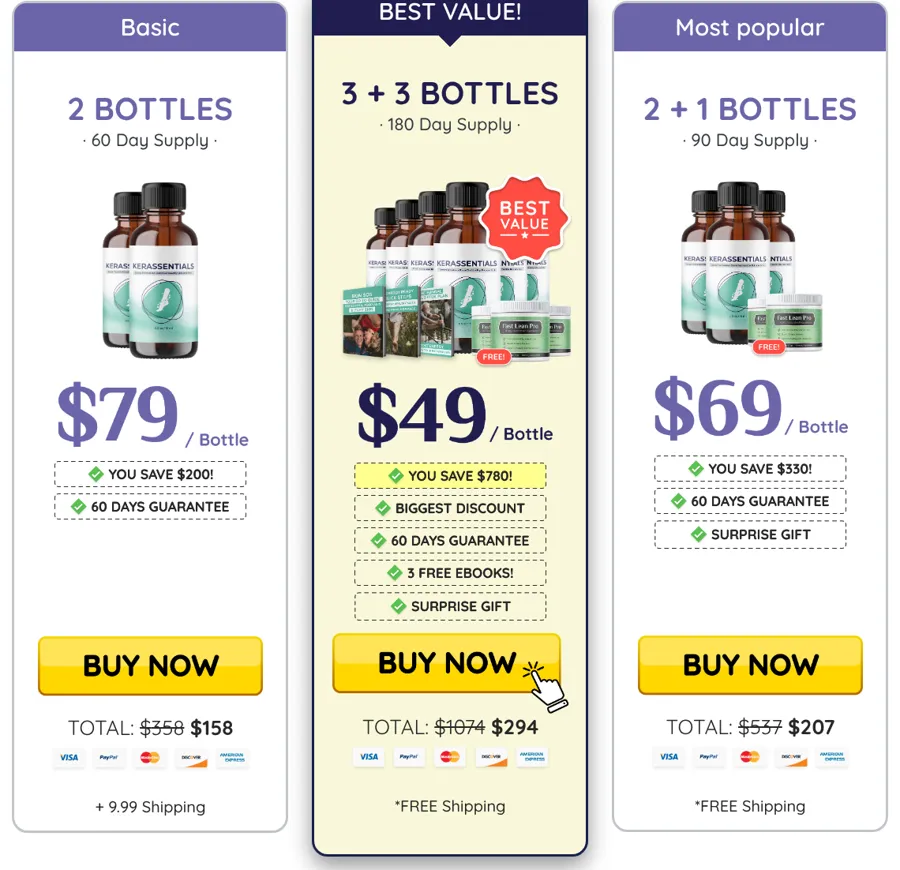
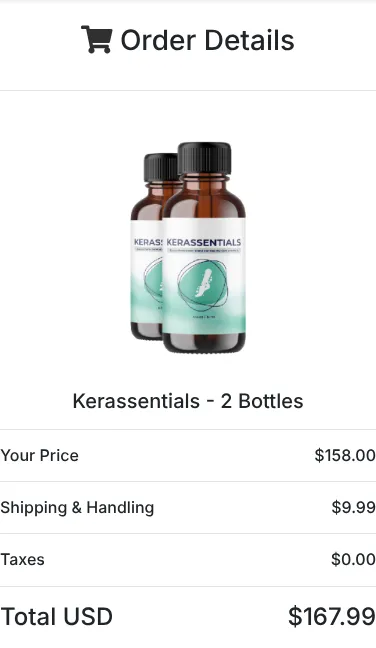
- The order page offered 2 bottles at $79, 2 + 1 bottles at $69 and 3 + 3 bottles at $49 per bottle.
- The 2-bottle checkout showed $158.00 plus $9.99 shipping and handling, $167.99 total. The 2 + 1 bundle came to $207.00 and the 3 + 3 bundle to $294.00, both with $0.00 shipping.
- The refund page counts the 60 days from the day the package is delivered. Contact address listed: contact@kerassentials-product.com.
Where to Buy Kerassentials
The brand says Kerassentials is sold only through its official website and warns that copies appear on other sites. Listings on marketplaces or unfamiliar web stores may be old stock or imitations and are unlikely to be covered by the 60-day guarantee. Ordering from the official order page is the most reliable way to get the genuine product and a refund route you can actually use.
Final Verdict
Kerassentials is a more transparent product than its sales page suggests. The full label is published, it includes a recognized OTC antifungal, and the essential oils it uses — tea tree, clove, camphor and menthol among them — are the same ones that show up in small studies and lab research on nail fungus. The conditioning oils are a genuine plus for dry, brittle nails.
The limits are just as clear. Undecylenic acid is present at only 5%, the essential oil amounts are not given, there is no trial of the finished formula, and the website's own pages disagree on the ingredient list and application schedule. If your nail problem is mild, a clinician has confirmed the cause, you have no nut allergy or diabetes-related foot issues, and you are willing to apply it diligently for months, Kerassentials is a reasonable topical to try under its 60-day guarantee. Keep expectations realistic: it may support healthier-looking nails and skin, but it is not a replacement for medical care.
Frequently Asked Questions (FAQs)
Is Kerassentials FDA-approved?
No. Kerassentials is not an approved antifungal drug. The official site says it is made in an FDA-registered facility that follows GMP, which relates to manufacturing standards, not proof that the product works.
How often should I apply Kerassentials?
The label says four times a day — twice in the morning and twice in the afternoon — using the brush on the nail and a cotton swab on the cuticle. The sales page mentions once daily after a shower; follow the directions on the bottle you receive.
How long does Kerassentials take to show results?
The brand's help page mentions about 9 to 12 weeks, but toenails take 12 to 18 months to grow out fully. Judge progress by clear new nail growing in at the base, and take monthly photos.
What are the ingredients in Kerassentials?
The label lists undecylenic acid (5%), mineral oil, sweet almond, flaxseed, tea tree, aloe vera, canola, vitamin E, walnut, menthol, camphor, clove bud, jojoba, chia, lemongrass, lavender and manuka oils.
Does Kerassentials have side effects?
No serious side effects have been publicly reported. Essential oils can irritate or sensitize the skin, and it contains almond and walnut oils. Patch test first, and never swallow it.
Is Kerassentials a subscription?
No. The official help page says it is a one-time payment with no recurring shipments or charges.
What is the Kerassentials refund policy?
You have 60 days from delivery. Email support with "Refund Request" in the subject and return all bottles, even empty ones, with the packing slip. Return postage is your cost.
Want to compare the current Kerassentials packages? The official site lists today's prices.
Visit the Official Kerassentials Website →References
- Buck DS, Nidorf DM, Addino JG. Comparison of two topical preparations for the treatment of onychomycosis: Melaleuca alternifolia (tea tree) oil and clotrimazole. J Fam Pract. 1994;38(6):601-605.
- Syed TA, et al. Treatment of toenail onychomycosis with 2% butenafine and 5% Melaleuca alternifolia (tea tree) oil in cream. Trop Med Int Health. 1999;4(4):284-287.
- Derby R, et al. Novel treatment of onychomycosis using over-the-counter mentholated ointment: a clinical case series. J Am Board Fam Med. 2011;24(1):69-74.
- Elewski BE, et al. Efinaconazole 10% solution in the treatment of toenail onychomycosis: two phase III multicenter, randomized, double-blind studies. J Am Acad Dermatol. 2013;68(4):600-608.
- Foley K, et al. Topical and device-based treatments for fungal infections of the toenails. Cochrane Database Syst Rev. 2020;(1):CD012093.
- Chee HY, Lee MH. Antifungal activity of clove essential oil and its volatile vapour against dermatophytic fungi. Mycobiology. 2007;35(4):241-243.
- US Code of Federal Regulations, 21 CFR 333.210 — Antifungal active ingredients (topical OTC products).
- National Center for Complementary and Integrative Health (NCCIH). Tea Tree Oil.
- National Center for Complementary and Integrative Health (NCCIH). Lavender.
- American Academy of Dermatology. Nail fungus: diagnosis and treatment.
- MedlinePlus (US National Library of Medicine). Nail fungus.
This review is for general information only and is not medical advice. Product details (ingredients, prices, guarantee) come from the official Kerassentials pages as checked in October 2026; they can change, so confirm them at checkout. Talk to your doctor before starting any supplement, especially if you take prescription medication or have a health condition.